Setareh Taherlu and Ali Asghar Alami Hanged in Damghan
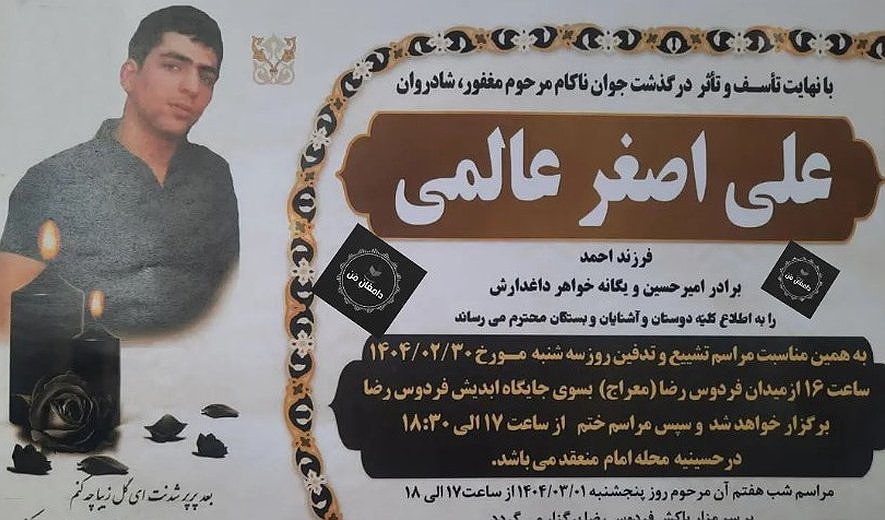
Iran Human Rights (IHRNGO); May 25, 2025: Setareh Taherlu, a woman on death row for drug-related offences, and Ali Asghar Alami, a man on death row for murder, were executed in Damghan Prison.
According to information obtained by Iran Human Rights, a woman and man were hanged in Damghan Prison on 19 May 2025. The woman who was on death row for drug-related offences has been identified as Setareh Taherlu. The man’s identity has been established as 30-year-old Ali Asghar Alami. He was sentenced to qisas (retribution-in-kind) for murder.
An informed source told IHRNGO: “Setareh was arrested for drug offences three years ago. She owned a pickup truck in which drugs were discovered. Ali Asghar was arrested for a murder during a street fight eleven years ago.”
At the time of writing, their executions have not been reported by domestic media or officials in Iran.
Drug-related executions have continuously risen every year since 2021. According to IHRNGO’s 2024 Annual Report on the Death Penalty, at least 503 people were executed for drug-related charges, of which only under 3% were announced by official sources. 17% of all drug-related executions in 2024 were Baluch minorities while they represent 2-6% of Iran’s population. In the first four months of 2025, at least 169 people were hanged for drug-related offences.
Setareh Taherlu is the 16th woman execution recorded in 2025. Iran executes the highest number of women globally. In 2024, at least 31 women were executed for drug-related, murder and security-related charges in Iran, the highest number of recorded women executions in more than 15 years.
In January 2025, IHRNGO published a report titled “Women and the Death Penalty in Iran; a Gendered Perspective,” which sheds light on the contemporary experiences of women facing the death penalty, focusing on the discriminatory laws and societal factors that perpetuate their suffering.
More from @ihrights
IHRNGO is building a strong civil society, through empowerment of the citizens, promoting and defending the human rights.
Latest Cartoon
Latest Report