Day Two of the Anti-Death Penalty Strike in Unit 2 of Ghezelhesar Prison
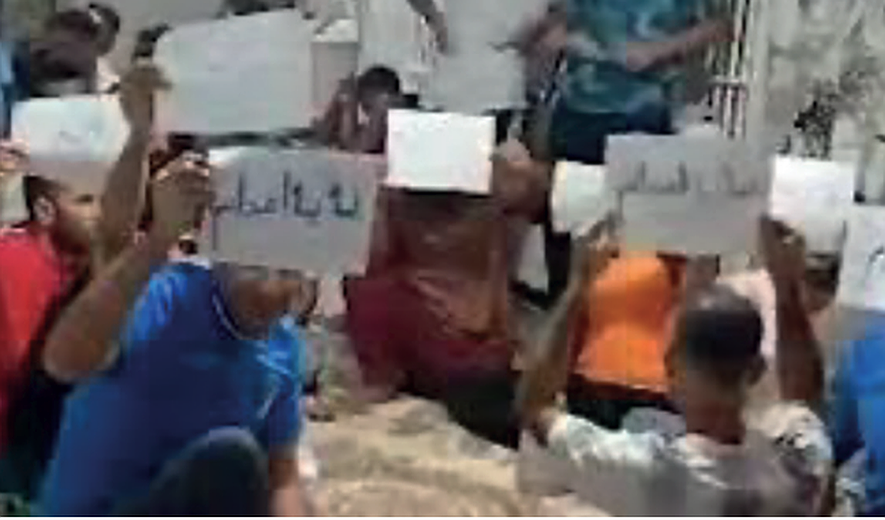
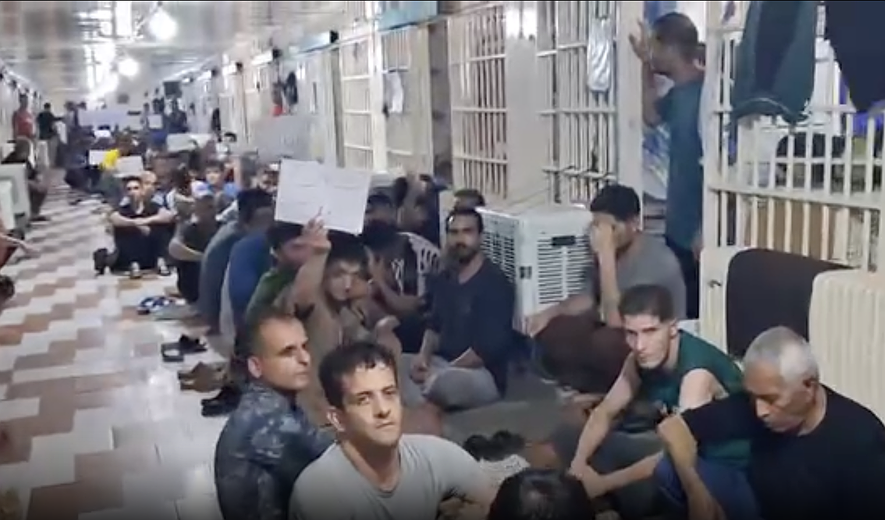
Iran Human Rights (IHRNGO); 14 July 2026: Prisoners in Unit 2 of Ghezelhesar Prison have entered the second day of a mass hunger strike in a desperate bid to halt the imminent execution of their fellow prisoners who were transferred to pre-execution solitary confinement cells yesterday.
The strike began on 13 July 2026 after six men on death row for drug-related offences were reported to have been transferred to solitary confinement in preparation for their executions. In response, all prisoners in Unit 2 launched a collective hunger strike to halt the scheduled executions.
IHRNGO has established the identities of four of the transferred men as Seyed Iman Heidari from Tehran, Ayoub Asadi from Harsin, Vahid Teimuri and Hamed Nazariani from Kouhdasht.
In a video message obtained by IHRNGO, the striking prisoners made a direct appeal to the Iranian public. Holding up handwritten signs with “no death penalty,” a spokesperson for the group said:
"In the name of God. Today is 14 July 2026, the second day of the strike by the prisoners of Ghezelhesar. We appeal to the noble and dear people of Iran to be the voice of those of us on death row for drug offences and to convey our demands to the relevant authorities.
Dear people of Iran, as remorseful members of society who deeply regret our actions, we ask you to be our voice. We also urge the judiciary and respected officials to halt these executions, grant us a one-degree reduction in our sentences and return us to our families.
Dear people of Iran, we are part of your families too. We only turned to this [drug offences] to make a living, driven by poverty and destitution. Please be our voice and make our plea heard by all the officials."
The prisoners then chanted in unison: "No to executions! No to executions! No to executions! No to executions!"
This collective action mirrors the historic protest of October 2025, when more than 1,500 prisoners on death row for drug offences in Unit 2 of Ghezelhesar Prison staged a mass six-day strike, sewing their lips shut to demand an end to executions. Supported by families demonstrating outside the parliament building in Tehran, the prisoners successfully pressured authorities to halt drug-related executions pending legislative amendments. Since the October 2025 strike, IHRNGO has recorded the secret execution of only one individual, Alireza Ahmadi, for drug offences at the prison.
Drug-related executions have continuously risen every year since 2021. According to IHRNGO’s 2025 Annual Report on the Death Penalty, at least 795 people were executed for drug-related charges, of which only 0.18% were announced by official sources. 13% of all drug-related executions in 2025 were Baluch minorities while they represent 2-6% of Iran’s population.
In December 2025, IHRNGO published a report titled “A Village of Graves: Widespread and Systematic Drug Executions in Iran,” which provides an overview of drug laws and documents the systematic violation of due process and fair trial rights in drug cases.
More from @ihrights
IHRNGO is building a strong civil society, through empowerment of the citizens, promoting and defending the human rights.
Latest Cartoon
Latest Report