Ahmad Parviz Hanged for Murder in Ghezelhesar Prison
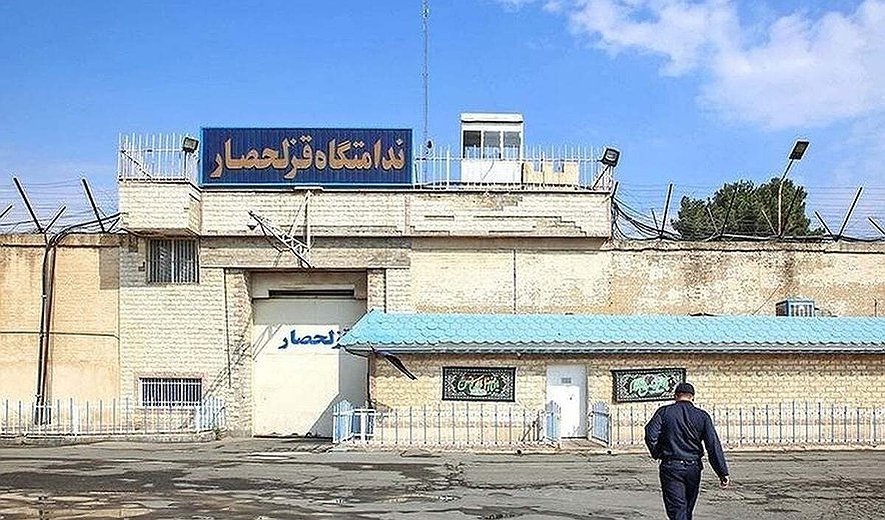
Iran Human Rights (IHRNGO); 15 October 2026: Ahmad Parviz, a former lawyer, was executed in Ghezelhesar Prison for the murder of his wife, IRNA journalist Mansoureh Ghadiri.
According to Etemad Online, a man only identified as “Ahmad. P” was hanged at an unspecified location on 14 October 2026. IHRNGO has established his identity as Ahmad Parviz and the location of his execution as Ghezelhesar Prison.
IRNA reported that Ahmad Parviz was sentenced to qisas (retribution-in-kind) for murder by Branch 10 of Criminal Court One of Tehran Province following a trial session held on 9 March 2025. The preliminary qisasruling was issued on 26 March 2025, alongside an order to pay diya (blood money) for non-fatal injuries inflicted on the victim. His death sentence was subsequently affirmed by the Supreme Court prior to implementation.
Mansoureh Ghadiri-Javid, a 52-year-old IRNA journalist, was killed inside her home on 10 November 2024. Official media initially reported that she died from dumbbell blows and multiple knife wounds following what authorities described as a "family dispute.”
According to Etemad Online, Ahmad confessed that he planned the murder out of fear that his wife would discover he had lied about enrolling their 15-year-old son in school, compounded by pressure over unpaid rent. He stated that he took four methadone tablets prior to the attack, ambushed her with a dumbbell and stabbed her twice in the neck, having also unsuccessfully attempted to kill their son with sleeping pills. While their 15-year-old son formally waived his right to retribution, the victim’s mother had requested execution as retribution. Under Iranian law, which values a woman's life at half that of a man's, the execution was implemented only after the tafazol diya (the difference between male and female blood money) and the son’s financial share were paid using funds posthumously recovered from Mansoureh Ghadiri-Javid's own dowry.
In an account published by IRNA, the victim's sister stated that Ahmad had severed contact between Mansoureh and her family for more than six years, barring relatives from visiting the residence. The sister recounted that on the morning of the murder, Ahmad took their teenage son out of the flat and returned to kill Mansoureh whilst she was alone. He subsequently brought the child back to the property, kept him from school and instructed him not to enter the bedroom under the pretence that it had been sprayed with pesticides.
According to her sister's account in IRNA, she became alarmed when Mansoureh failed to report to work or attend a scheduled medical appointment that afternoon. When relatives arrived at the property, Ahmad claimed she had gone to the cinema with their son and sent text messages from her phone to deflect suspicion. Family members contacted the police, and firefighters breached the flat's door under a judicial warrant at approximately 21:00. Neighbours reported hearing screams from the flat at around 08:00 that morning, and adhesive had been smeared over the peephole of the flat opposite to obstruct the view into the corridor.
In a statement published on X (formerly Twitter), Ahmad’s defence lawyer, Seyed Mahdi Razavifard, challenged the official portrayal of the case, arguing that his client suffered from severe psychological detachment and chronic psychiatric disorders exacerbated by years of extreme domestic isolation. Razavifard stated that while he did not enter a formal plea of legal insanity, he argued on jurisprudential grounds that Ahmad lacked full criminal agency, criticising the Forensic Medical Organisation's routine mental competency evaluations as superficial. The lawyer further stated that Ahmad repeatedly disrupted the hearing and contradicted his own defence counsel by insisting he was mentally sound, which Razavifard cited as evidence of profound mental disturbance rather than calculated evasion.
Those charged with the umbrella term of “intentional murder” are sentenced to qisas (retribution-in-kind) regardless of intent or mitigating factors due to a lack of grading in law. Once a defendant has been convicted, the victim’s family are required to choose between death as retribution, diya (blood money) or forgiveness.
Crucially, while an indicative diya amount is set by the Judiciary every year, there is no legal limit to how much can be demanded by families of the victims. IHRNGO has recorded many cases where defendants are executed because they cannot afford to pay the blood money. Should the victim’s family choose execution, they are not only encouraged to attend, but also to physically carry out the execution themselves.
According to IHRNGO’s 2025 Annual Report on the Death Penalty, at least 747 people including 48 women, were executed for murder charges, the highest number of qisas executions since 2010. Under 7% of the recorded qisas executions were announced by official sources. In 2025, IHRNGO also recorded 566 cases of families choosing diya or forgiveness instead of qisas executions. In the first nine months of 2026, at least 306 people were executed for murder charges.
More from @ihrights
IHRNGO is building a strong civil society, through empowerment of the citizens, promoting and defending the human rights.
Latest Cartoon
Latest Report