Child Bride Kolsoom Akbari at Grave Risk of Execution in Sari
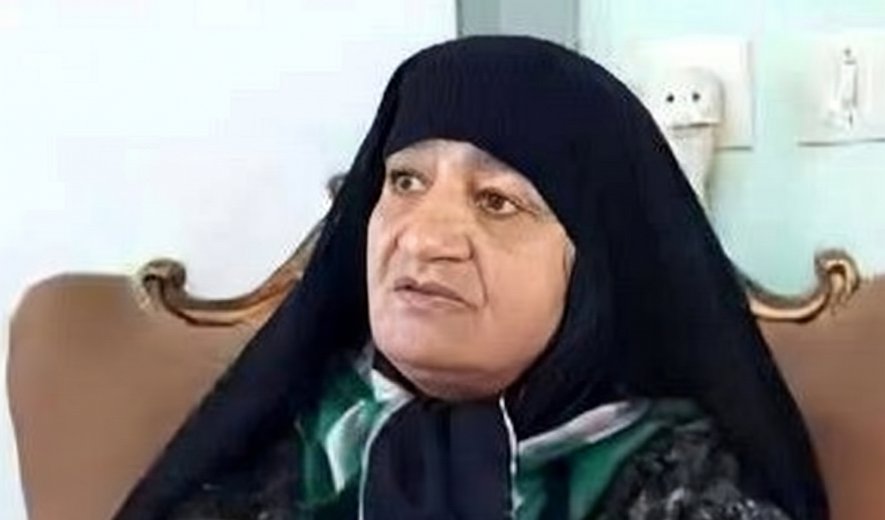
Iran Human Rights (IHRNGO); 23 October 2026: Kolsoom Akbari, a woman sentenced to ten counts of qisas (retribution in kind), is at grave risk of execution in Sari Central Prison after her case was sent to the sentence enforcement stage for implementation. Her forced confessions were aired prior to the commencement of formal legal proceedings.
According to the judiciary’s Mizan News Agency, Kolsoom Akbari, a 59- year-old woman, was sentenced to qisas by Branch One of the Mazandaran province Criminal Court. Speaking at a press conference on 6 October, Seyed Ali Kazemi, the judiciary’s spokesperson said: "Branch 29 of the Supreme Court reviewed the case and issued its ruling, dismissing the defendant's appeal. Following estizan (formal judicial authorisation), the case will move forward to the enforcement stage for the implementation of the sentence and necessary procedures."
"Ms Akbari was tried on 11 counts of the premeditated murder of 11 Muslim men who were her husbands. The families of 10 of the victims requested qisas, and she has been sentenced to 10 counts of qisas," the judiciary’s spokesperson said.
Labelled as the “black widow,” by Iranian media, Kolsoom was accused of killing her husbands/sighes (temporary marriages) through poisoning and suffocation over a 22-year period. Her forced confessions were aired by state media prior to the commencement of the legal proceedings. The judge in the case emphasised in media interviews: "She appeared simple, but like other serial killers, she possessed the intellect required for concealment."
Kolsoom Akbari, 59, was born in a village near Sari. According to official reports, “she saw her life shaped by poverty and loss from the age of 11 following a forced marriage: her son died of heart disease and her first husband passed away of natural causes. However, according to her confessions in court, these tragedies sparked a deadly cycle.”
The judiciary statesperson stated: “A personality profile was established for the defendant, and numerous interviews were conducted by expert criminologists and psychologists. God willing, we will fully outline the issue and announce the results of these studies in an academic and media forum. Three key concepts were focused on in these studies: 'a dangerous personality resulting from violence,’ 'poverty' and 'neglect of the elderly.’ God willing, further details regarding these matters and preventive solutions against the occurrence of such bitter events in society will be provided in an official session."
In January 2025, IHRNGO published a report titled “Women and the Death Penalty in Iran; a Gendered Perspective,” which sheds light on the contemporary experiences of women facing the death penalty, focusing on the discriminatory laws and societal factors that perpetuate their suffering.
More from @ihrights
IHRNGO is building a strong civil society, through empowerment of the citizens, promoting and defending the human rights.
Latest Cartoon
Latest Report