January Protests: Torture Complaint by Rahimi Sisters Referred to Accused Investigator as Lawyer Held Incommunicado
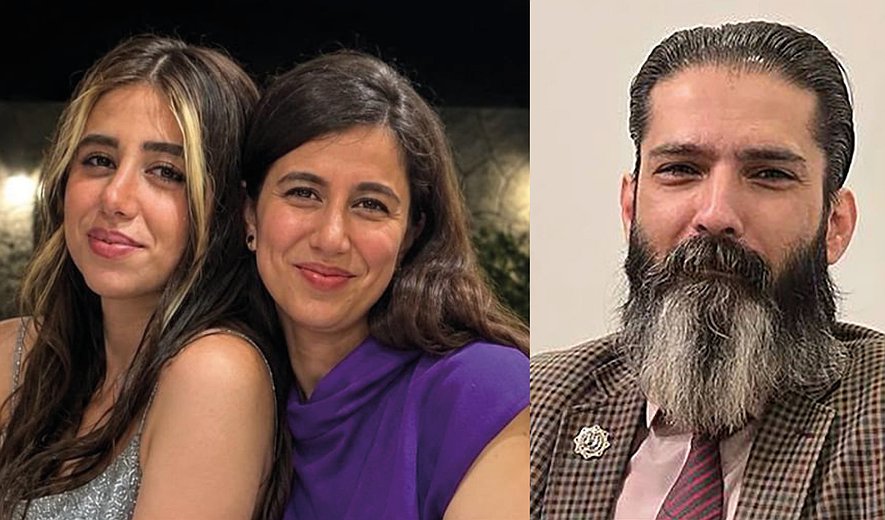
Iran Human Rights (IHRNGO); 29 October 2026: A torture complaint filed by human rights lawyer Amirsalar Davoudi on behalf of two sisters arrested during Iran’s January protests has been referred to the very investigator accused of torturing them. Romina and Taraneh Rahimi reported severe physical torture, sexual violence and the extraction of forced confessions while in detention. Taraneh has been sentenced to death, while Romina faces 25 years behind bars. Meanwhile, Amirsalar Davoudi, who represented defendants in the case, has been held incommunicado since his arrest on 11 October, despite a prosecutor’s order allowing contact with his family.
According to information obtained by Iran Human Rights, following Amirsalar Davoudi's arrest, a new lawyer was appointed to represent sisters Romina and Taraneh Rahimi. However, judicial authorities have systematically blocked the new counsel from accessing and reviewing the case file, despite the sisters being the formal complainants in the torture allegations.
An informed source told IHRNGO: “Following the arrest of Amirsalar Davoudi, the torture complaint was referred to the prosecutor's office. The judiciary initially refused to accept the new lawyer of choice, stating that only counsel approved under the Note to Article 48 of the Code of Criminal Procedure was permitted. However, through the family’s persistent efforts, the lawyer’s representation was eventually accepted, but they continue to be denied permission to access and review the case file. This is while under the Islamic Republic’s own laws, a complainant is entitled to examine the case file under all circumstances.”
The complaint arises from the Isfahan “Shohada Square" case, which relates to protests in Isfahan in January 2026. Following summary proceedings, Isfahan Revolutionary Court issued preliminary death sentences on charges of moharebeh (enmity against God) for 10 defendants: Taraneh Rahimi, Navid Elyasi, Abolfazl Dadgostar, Mehdi Mansouri, Ahmadreza Saeedi, Mehrdad Boveyri, Mohammad Mehdi Asadi, Armin Gholami, Parsa Jafari and Mehdi Jafari (also known as Mehdi Khosravi). Six other defendants were sentenced to lengthy imprisonment: Romina Rahimi and Milad Boveyri to 25 years each, Hamed Mehralian to 15 years, and Setayesh Saedi, Sajad Abedi and Ali Boveyri to five years each. Furthermore, all 16 defendants received an additional 11 years of imprisonment comprising five years for "assembly and collusion against national security," five years for "incitement" and one year for "propaganda against the system.”
During interrogation and pre-trial detention, defendants in the Shohada Square case reported severe torture, including electric shocks applied to sensitive areas of the body, physical beatings and sexual assault. The court systematically disregarded these reports, relying on statements extracted under torture and duress to issue its verdict.
The torture complaint had originally been submitted during proceedings in the written defence brief. Under Iranian procedural rules, allegations of unlawful conduct and torture raised during ongoing hearings must be formally examined. In the concluding lines of the written verdict, the court directed that the complaint submitted by the Rahimi sisters' counsel be forwarded to the prosecutor's office for investigation.
However, rather than assigning the complaint to an independent investigator, judicial authorities referred the case directly back to Mohammad Feraydanizadeh, named in the complaint as both the investigator and a primary perpetrator who personally subjected defendants to physical torture and extracted coerced confessions in solitary confinement. He was previously the investigator of Branch 15 of the Prosecutor's Office handling the Alikhani and Shohada Square cases, and is now the investigator of Branch 11 of the Prosecutor's Office, the torture complaint, which administratively sits in Branch 15 of the Prosecutor's Office, has once again been assigned directly to him to investigate.
Amirsalar Davoudi, a human rights lawyer who represented defendants in both the “Alikhani Square” and “Shohada Square” case, has been held incommunicado since his arrest on 11 October. While threatening to bring trumped-up charges under Article 4 of the new Espionage Bill, Isfahan’s head of judiciary stated that Amirsalar was charged with “publishing falsehoods online to disturb public opinion, inciting people to kill one another with the intention of disrupting national security and propaganda against the system.”
Despite an explicit order issued by the prosecutor granting him contact with his family, enforcement officers continue to hold him incommunicado and deny him all phone calls and visits. Furthermore, the state-approved lawyer in the case has been barred from accessing his case file while authorities subject him to intense pressure to extract forced confessions.
More from @ihrights
IHRNGO is building a strong civil society, through empowerment of the citizens, promoting and defending the human rights.
Latest Cartoon
Latest Report