Mohammad Seifzadeh
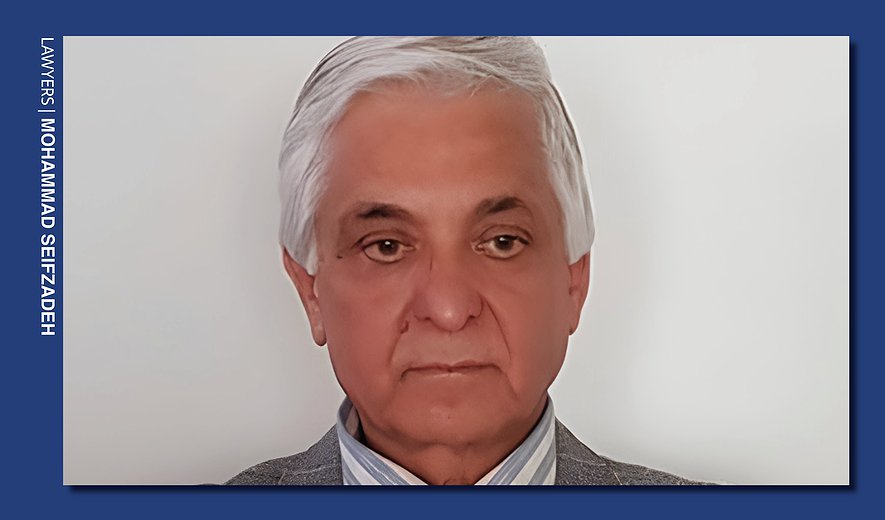
Age: 78
Activism/rights: Human rights lawyer
Status: Released: enforcement of sentence suspended due to illness
Judicial status: 1 year’s imprisonment
Violations: Arbitrary arrest and detention; lack of a fair trial and due process; torture; denial of medical care; prolonged solitary confinement; failure to observe separation of offences; judicial harassment
Mohammad Seifzadeh Mohammad Seifzadeh is a veteran lawyer and one of the co-founders of the Centre for the Defence of Human Rights in Iran who has previously jailed 13 times for his human rights work. : five times during under the Pahlavi rule and eight times following the establishment of the Islamic Republic. He served as a judge from before the 1979 Revolution until 1982, when he resigned from the judiciary after refusing to apply the Islamic Penal Code. In November 2010, Mohammad was sentenced to nine years’ imprisonment and a ten-year ban on practising law on the charge of “action against national security through participation in the establishment of the Defenders of Human Rights Center of Iran”. On appeal, the Tehran Court of Appeal reduced the sentence to two years. On 6 April 2011, he was arrested in the city of Urmia on the charge of illegal exit from the country. After one month in solitary confinement, he was transferred to the general ward of Evin Prison. In 2012, while already serving a prison sentence, Mohammad was charged with 'assembly and collusion against national security' for signing collective statements and writing a letter to the former president, Mohammad. Following a trial presided over by "Death Judge" Salavati, he was handed a six-year prison term. In January 2013, he was exiled to Rajai Shahr Prison and held in violation of the principle of the separation of offences. He was released from prison 10 March 2016 upon completion of his sentence. While imprisoned in Evin and Rajai Shahr prisons, he suffered seven heart attacks due to poor conditions and the denial of medical care.
In December 2022, Mohammad and several human rights activists signed a letter addressed to the United Nations Secretary-General, António Guterres, calling for a response to executions and the suppression of the 'Woman, Life, Freedom' protests. In April 2023, Branch 29 of the Tehran Revolutionary Court, presided over by Ali Mazloumi, sentenced him to one year’s imprisonment on charges of “propaganda against the system” and “spreading false information” for the letter. This ruling was upheld by Branch 36 of the Tehran Court of Appeal, although both courts held proceedings in absentia, as he had described the Revolutionary Courts as unlawful and refused to attend their sessions.
Following the confirmation of his sentence, the authorities demanded that Mohammad sign a letter of repentance requesting a pardon from the Supreme Leader of the Islamic Republic, which he refused. After being summoned several times to serve his sentence, the enforcement of his term was temporarily suspended on 26 July 2023 following a medical assessment by the Legal Medicine Organisation.
In April 2024, Mohammad was summoned to the Evin Prosecutor's Office once more for the enforcement of his sentence, which was subsequently suspended following his hospitalisation for heart surgery.
More from @ihrights
IHRNGO is building a strong civil society, through empowerment of the citizens, promoting and defending the human rights.
Latest Cartoon
Latest Report