Amiry-Moghaddam: Parties with differing political views are signing a document on fundamental human rights
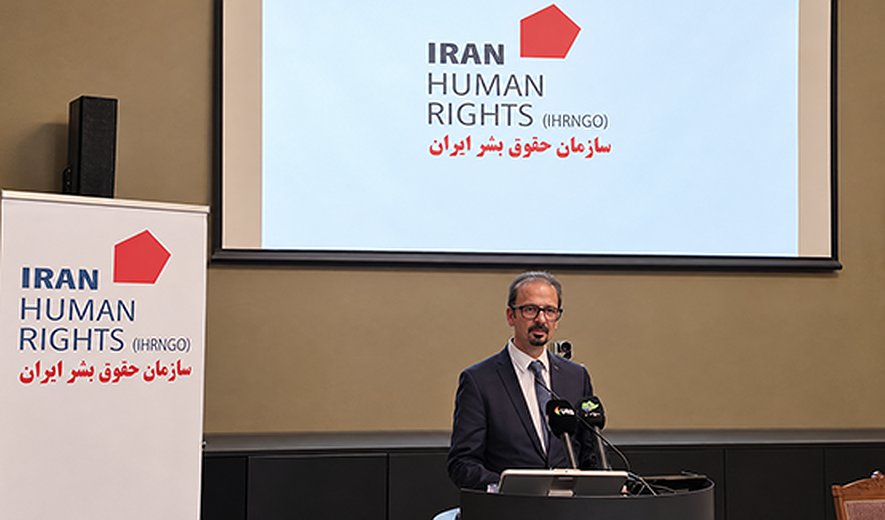
Mahmood Amiry-Moghaddam, director of Iran Human Rights, told the Oslo conference “Iran’s Human Rights Crisis: From Shared Principles to Joint Action”: “Today is an important day for Iran Human Rights and for all of us. After months of dialogue, representatives of parties and organisations with different political views and programmes have come together to sign a document. It concerns neither the division of power, nor the form of a future government, nor the creation of a political coalition. Its subject is the fundamental rights of the people of Iran.”
According to Iran Human Rights (IHRNGO), Amiry-Moghaddam made the remarks in his opening address to the conference, held in Oslo on 25–26 September 2026. The event brought together representatives of political parties and organisations and was the sixth conference organised and hosted by IHRNGO.
The initiative began at the previous year’s Oslo conference. Months of discussions followed, during which participants put forward differing views and gradually developed the text. Amiry-Moghaddam thanked those involved, particularly participants who had been willing to engage with one another despite serious political differences.
All opposition parties and movements had been invited to take part, he said. The aim was to ensure that agreement on fundamental rights extended beyond any single political movement or vision of Iran’s future. The invitation remained open.
Amiry-Moghaddam argued that the document’s strength lay in its limited scope. Neither its substance nor its wording reflected every demand of its signatories, and it did not seek to encompass all their aspirations. Instead, it affirmed one essential principle: “Whoever holds power in the future, the rights and dignity of all people in Iran must be guaranteed.”
Agreement on Iran’s political future was not a prerequisite. “No one’s rights in that future should depend on their identity, beliefs or political affiliation,” he said.
That principle also applied to the defence of human rights in Iran today. Faced with the killing of protesters, executions, the imprisonment of opponents and other abuses, support for victims must not depend on their identity or political allegiance.
As an independent human rights organisation, IHRNGO took no position on which political movement should govern Iran, he explained. Its responsibility was to insist that anyone holding power respect everyone’s rights, without exception.
“Today’s signing is not the end of the work,” Amiry-Moghaddam said. “The true value of these principles will become clear when we uphold them in practice.” He expressed hope that the document would lead to further dialogue and concrete action, demonstrating that profound political differences need not prevent people from standing together in defence of human rights and dignity.
Fifteen political parties and organisations had signed the document, he said, with representatives of twelve attending the event. Representatives of the Iran Transition Council, the Strategic Council of Republicans inside Iran and the Democratic Front of Iran were unable to attend. He also noted that Heshmat Tabarzadi, leader of the Democratic Front of Iran, was in prison.
Translated from Farsi via machine translation and lightly edited for clarity.
More from @ihrights
IHRNGO is building a strong civil society, through empowerment of the citizens, promoting and defending the human rights.
Latest Cartoon
Latest Report