8 Political Prisoners at Risk of Death Penalty
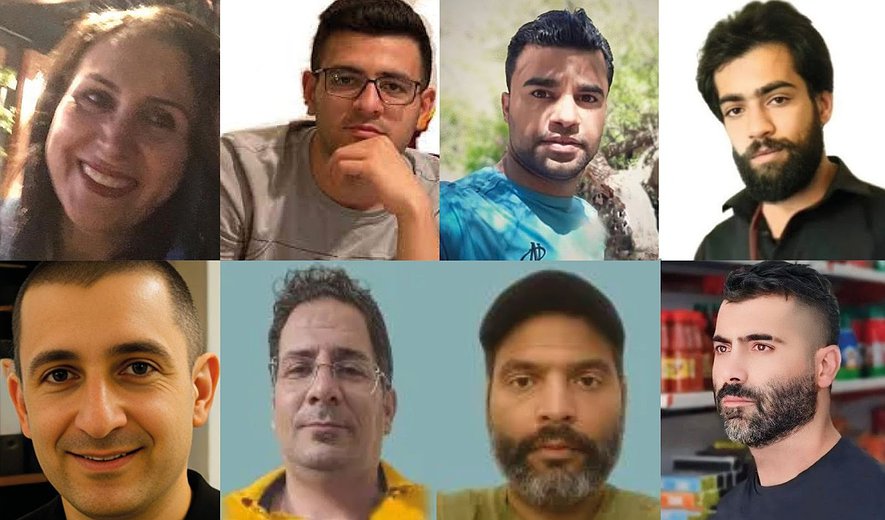
Iran Human Rights (IHRNGO); October 28, 2025: The latest developments in the cases of eight political prisoners indicate that they are at risk of execution. The death sentences of Mohammad Javad Vafayi-Sani, Ehsan Faridi, Manouchehr Fallah and Hossein Shahouzehi have been upheld, and Zahra Shahbaz Tabari, Hamed Validi, Nima Shahi, and Pejman Toubreh-Rizi have been sentenced to death.
Iran Human Rights strongly condemns the issuance of these sentences, draws the attention of Iranians and the international community to the increased repression through the death penalty, and calls for an appropriate response from the international community.
IHRNGO Director Mahmood Amiry-Moghaddam stated: “The growing issuance of death sentences for political prisoners following the unprecedented wave of executions in recent months, evoked the Islamic Republic's determination to repeat the mass executions of the 1980s. The risk of execution of political prisoners is serious and imminent, and the international community must make the prevention of further executions a top priority."
Mohammad Javad Vafayi-Sani
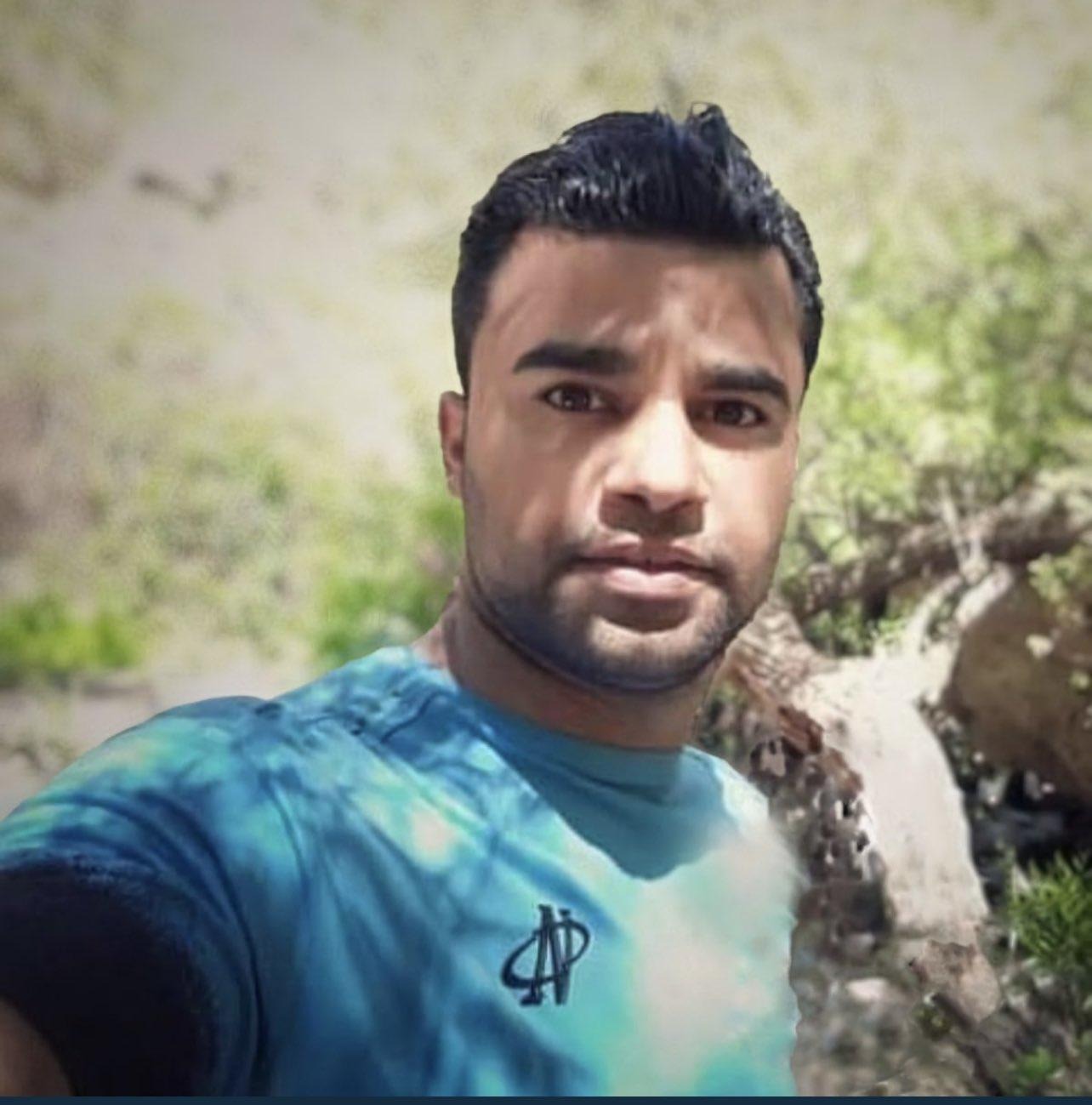
Mohammad Javad Vafayi-Sani is a 29-year-old boxing champion arrested in February 2020 in relation to the November 2019 nationwide protests and subjected to torture to obtain forced confessions. He was set a bail of 30 billion tomans (around €950k at the time) which his family could not afford. He was sentenced to death on charges of efsad-fil-arz (corruption on earth) through “arson and intentional destruction of public buildings” by Branch 4 of the Mashhad Revolutionary Court. Mohammad Javad’s sentence was subsequently overturned twice and sent to courts of equal standing for retrial. He was ultimately resentenced to death for the third time by Branch 3 of the Mashhad Revolutionary Court on 20 September 2024.
On 4 October 2025, his lawyer Babak Paknia reported that Mohammad Javad’s death sentence had been upheld by Branch 9 of the Supreme Court. He tweeted: “Regarding the flaws and third-party interference in the judicial process, correspondence has been sent to the Head of the Judiciary; I hope his special inspectors will look into the matter before it is too late.”
Ehsan Faridi
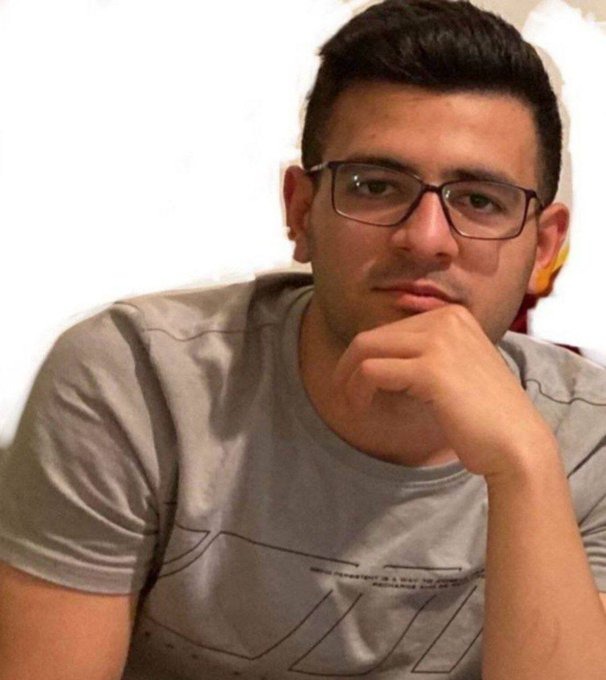
Ehsan Faridi is a 22-year-old Manufacturing Engineering student at Tabriz University who was arrested in the early hours of 13 March 2024, the night of Chaharshanbe Souri (Iranian fire festival). In an interview with Ensaf News, Ehsan’s new lawyer, Mahmoud Behzadi-Rad said his client was arrested by local police “approximately 3 kilometres from the courthouse and moving in the opposite direction from that building, while carrying two Molotov cocktails.”
The police report described the arrest “like a Hollywood movie,” alleging an “explosive vest” or a “military weapon”, which the lawyer says referred to approximately 50 grams of gunpowder. The same report, he adds, recorded no actual damage to public property but nonetheless imputed an intent to burn the courthouse. Ehsan was released on bail nine days later and subsequently appeared in court in the month of Tir (21 June-21 July 2024), where unsolved incidents from previous years in Tabriz were attributed to him and he was instructed to obtain letters of forgiveness from institutions he said he did not even know. After angering the judge while disputing this demand, his bail was revoked and the charges were escalated from “attempted moharebeh” to moharebeh (enmity against God) and efsad-fil-arz (corruption on earth) through links to the PMOI/MEK.
Behzadi-Rad cites multiple due process violations, including that the defence was given only a few pages of the case file and denied full access, and that the court failed to observe Article 387 of the Code of Criminal Procedure, which requires a ten-day window in death or life-imprisonment cases to submit objections and new evidence. He further argues the court ignored the proviso to Article 286 of the Islamic Penal Code, under which, if intent to cause widespread public disorder is not established, the punishment should be five to six years’ taʿzir; he notes the arrest occurred around 4:30 am, when no public was present to be terrorised. In parallel proceedings, Branch 108 of the Criminal Court imposed 18 months’ imprisonment for the Molotov-cocktail offence, yet the Revolutionary Court treated the same conduct as efsad-fil-arz and issued a death sentence.
A retrial request filed on 13 October 2025 was sent to a chamber on 14 October and rejected at 12:50 pm the same day. Earlier, the Supreme Court had upheld the death sentence amid so-called “wartime conditions.” The lawyer stated: “They probably didn’t even read my eight-page retrial petition! I suspect that, to boost end-of-month statistics, they dismiss many cases without due attention so that benefits accrue to the staff of that chamber.”
The defence intends to appeal again, seeking transfer away from Branch 29, and has written to the allegedly damaged entities for loss figures. No responses have been received, which the lawyer argues indicates no demonstrable harm. He also contests characterising Molotov cocktails as “military weapons”, citing the Paris Yellow Vests protests as an example: “In the Yellow Vests protests, tens of thousands of Molotov cocktails might be thrown. Does that mean tens of thousands of people should have been charged with moharebeh and, if they were in Iran, executed? They set fire to thousands of police cars; the harshest sentence handed down was two months in prison, and that was because several police officers had been beaten!” Behzadi-Rad maintains that these procedural and substantive defects necessitate quashing the death sentence and ordering a fair rehearing.
In a video message obtained by IHRNGO from Ehsan’s parents, his mother, Parvin Hayati says: “My son was under 20 at the time of his arrest, and for 17 months he has breathed life behind prison bars, suspended between hope and fear. I kept silent for two years, but now I can no longer stay silent. Silence in the face of injustice is a betrayal. Ehsan is innocent. There is no evidence against him. I am a young mother whose only wish is that my child stays alive. I swear on Ehsan’s life and on the lives of all the innocent young people [on death row] that I will not rest until the unconditional release and an acquittal for my dear Ehsan, and I hope no mother, in such torment, is forced to go to such extremes to save her child’s life.”
Manouchehr Fallah
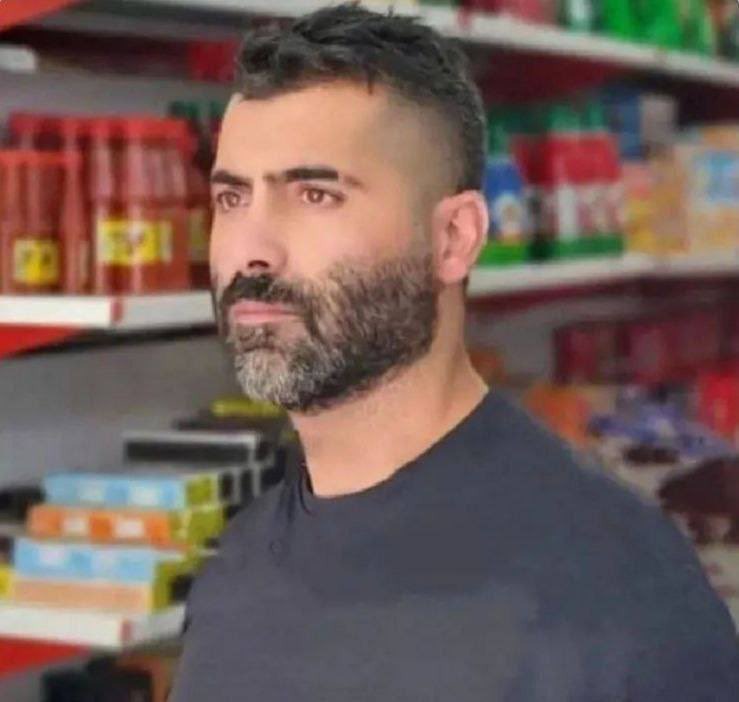
Manouchehr Fallah, a 42-year-old father of one from Rasht, was arrested in Rasht Airport in June/July 2023. In an interview with Emtedad, his lawyer, Milad Panahipour states that his client was a low-income labourer, and faces the death penalty for allegedly detonating a very small “sound device” at 00:30 on 1 June 2023 at the entrance to the Gilan Judiciary. An expert report valued the damage to the metal door and stone façade at 15 million tomans (330 euros). No injuries were reported and services reportedly continued the next day. He was initially summoned on bail of 200 million tomans (4,500 euros) and later charged with “propaganda against the state”, “insulting the Leader” and “destruction”. The trial court applied Article 687 of the Islamic Penal Code, which concerns damage to public-utility infrastructure causing disruption of services, to classify the act as destruction intended to disturb public order and confront the government. Manouchehr was sentenced to death on the charge of moharebeh (enmity against God) by Branch 2 of the Rasht Revolutionary Court, presided over by Judge Darvish Goftari. He also received a year of imprisonment for the propaganda charges which he has already served.
The Supreme Court has now rejected his appeal. Defence lawyer Milad Panahipour argues that Article 687 was misapplied, that there was no public harm and that the sentence is disproportionate. He stated: “What is attributed to my client is a very small explosion with no serious harm, at a time and place where no citizens were present,” and asked, “What harm to society justifies answering it with a human being’s execution?”
Hossein Shahuzehi
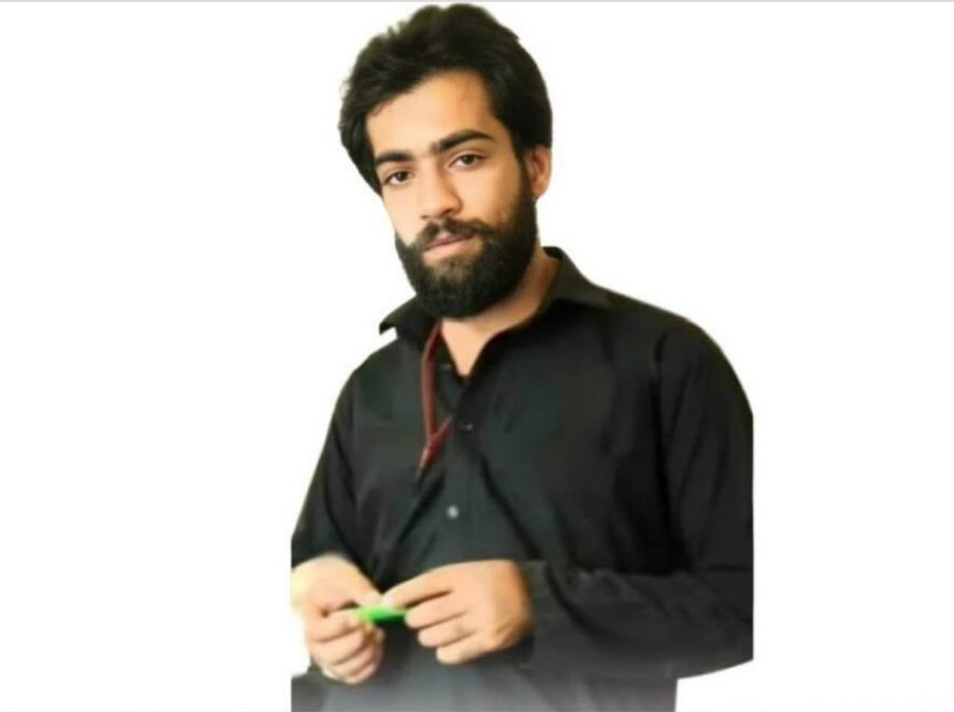
Hossein Shahouzehi is a 29-year-old Baloch political prisoner from Zahedan who was arrested in Mashhad on 10 December 2022 by plain-clothes IRGC Intelligence agents while on a bus at the city’s terminal. According to Haal Vsh, he was held for about six months in the IRGC Intelligence detention centre, where he was allegedly subjected to severe physical and psychological torture and denied access to a lawyer and family contact. Security agencies accused him of membership of Jaysh al-Adl, weapons possession, attempting to assassinate Ahmad Alamolhoda (the Supreme Leader’s representative in Khorasan Razavi province) and planning an attack on the Mashhad Governor’s Office. Hossein and his co-defendant’s torture-tainted confessions were aired by state media on 16 December, just days after their arrest. Hossein was sentenced to death for unspecified charges by the Mashhad Revolutionary Court, which was subsequently upheld, per Haal Vsh. He is held in Mashhad (Vakil Abad) Central Prison.
Zahra Shahbaz Tabari

Zahra Shahbaz Tabari is a 67-year-old electrical engineer, a member of Iran’s Engineering Organisation, and holds a master’s in Sustainable Energy from the University of Borås in Sweden. According to HRANA News Agency, she was arrested at her home on 16 April 2025 and transferred to Lakan Prison after security agents searched the residence and seized phones and a laptop. Her family reports that the case rests on scant, unreliable material, a cloth bearing the slogan “Woman, Resistance, Freedom” and an unpublished voice message, with no evidence of organisational or military links. Authorities attempted to introduce more serious allegations, including weapons possession, which the family describe as absurd and unfounded, particularly given her age and professional background.
Branch 1 of the Rasht Revolutionary Court held a videoconference hearing that her family says “lasted less than ten minutes,” and Judge Ahmad Darvish Goftar sentenced her to death for “cooperation with opposition group PMOI/MEK.” The exact charges against her are not clear.
In a letter sent by her child to HRANA, it states: “The judge announced the death sentence with a smile. The court-appointed lawyer also smiled when he heard the result.”
Hamed Validi and Nima Shahi
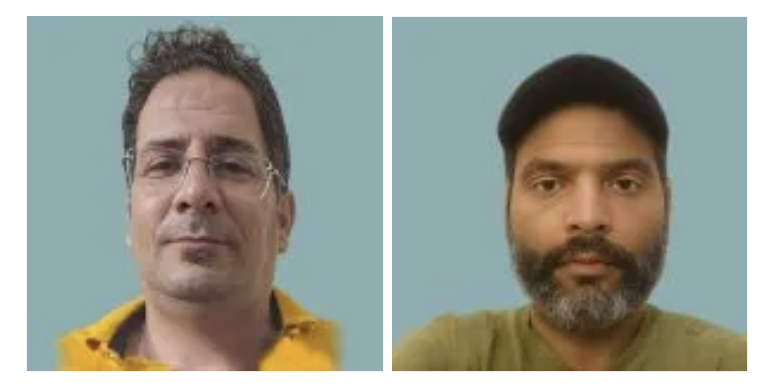
Hamed Validi, a 45-year-old civil engineer, and Nima Shahi, a 38-year-old technical worker, both residents of Karaj, were arrested in Tehran on 12 May 2025 and reportedly subjected to torture to extract self-incriminating confessions. According to the Judiciary’s Mizan News Agency, the two men were sentenced to death by Branch 3 of the Karaj Revolutionary Court on charges including “moharebeh, cooperation with hostile groups and the Zionist regime, assembly and collusion against national security, membership in a criminal group with the aim of disrupting national security and propaganda against the state.” The criminal group is cited as the People’s Mojahedin Organisation of Iran (PMOI/MEK).
According to the official report, the network, consisting of two men from Karaj and a married couple from Isfahan, was said to have been recruited online and on a trip to a neighbouring country, trained in secure communications, geolocation and the manufacture and launch of explosive projectiles, and to have carried out arson at military and public sites while sending videos and receiving cryptocurrency payments. In Ordibehesht (20 April-20 May 2025) they were reportedly tasked to attack a military facility in Tehran and, according to officials, two members were arrested at a launch site with ten ready-to-fire projectiles, leading to the arrest of two others and the seizure of munitions and mortar components from addresses in Karaj, Isfahan and a safehouse in Tehran.
The third and fourth defendants in the case, an unidentified man and woman, were sentenced to more than 26 years’ imprisonment.
Pejman Toubreh Rizi
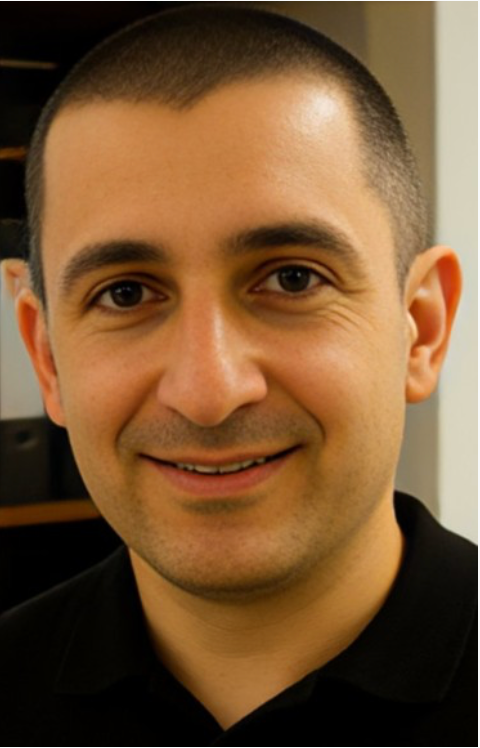
Pejman Toubreh Rizi is a 31-year-old Kurdish political prisoner from Kermanshah who was arrested in Tehran on 28 January 2025. According to reports, he was subjected to torture including electric shocks and severe beatings in both police custody and Ward 209 of Evin Prison where he was transferred to after two days and where he was detained for weeks without access to medical care. In further efforts to pressure him into making self-incriminating confessions, his family’s home was raided by Ministry of Intelligence agents On 13 July 2025, seizing phones; during the raid his cancer-stricken stepmother, Fariba Ahmadi, suffered a fatal heart attack.
During his trial held at Branch 28 of the Tehran Revolutionary Court on 26 July and 15 August 2025, he was asked by the judge to accept the charges and cooperate with the Ministry of Intelligence in exchange for exile to Saravan Prison and to sign a death sentence, which he refused on both occasions. Pejman was sentenced to death on the charge of efsad-fil-arz (corruption on earth) through membership of the PMOI/MEK on 1 September. He is currently held in Evin Prison.
IHRNGO is continuing to investigate the case of Pejman Toubreh Rizi and the other prisoners at risk of execution, and calls on lawyers, families, and informed individuals to share any information or documents they have with the organisation.
More from @ihrights
IHRNGO is building a strong civil society, through empowerment of the citizens, promoting and defending the human rights.
Latest Cartoon
Latest Report