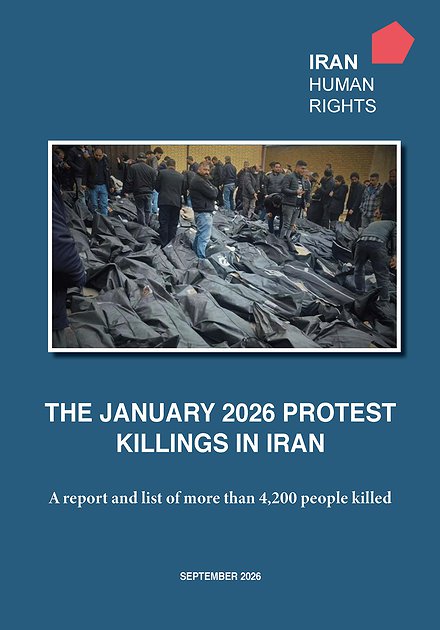
Ghaem Hosseini, Second Afghan National Hanged in Connection with January Protests
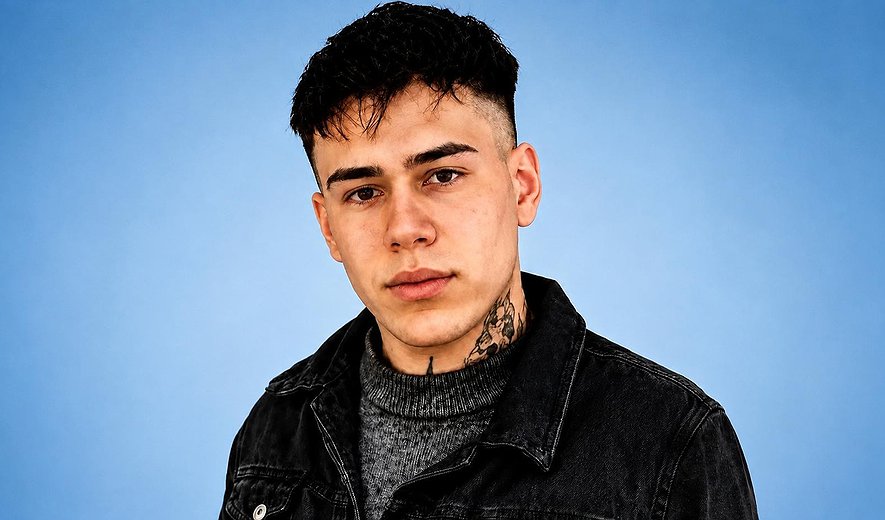
Iran Human Rights (IHRNGO); 20 August 2026: State media announced the execution of Ghaem (Arian) Hosseini, a 21-year-old Afghan protester arrested in connection with the January nationwide protests. Ghaem is the fifth defendant and second Afghan to be executed in the “Alikhani Square” case. IHRNGO has established the location of his execution as Isfahan Central Prison.
Ghaem is the 28th individual to be executed in connection with the January protests since 19 March. Two “Woman, Life, Freedom” protesters have also been executed during this period. His co-defendants Erfan Esfandiari and Gol Mohammad Mohammadi were executed at the prison on 19 July and Abolfazl Sepahi and Amirhossein Safari were publicly hanged in Alikhani Square, the scene of the alleged offences, on 28 July.
IHRNGO previously warned that over 70 protesters, including the defendants in the "Alikhani Square" case, were at risk of the death penalty at Isfahan Central Prison.
IHRNGO Director, Mahmood Amiry-Moghaddam stated: “The execution of Ghaem Hosseini is another stark example of collective punishment and the arbitrary use of the death penalty by the Islamic Republic to instill fear in society. With at least 30 protesters executed since 19 March, more than one every week, the international community must act urgently to stop this escalating wave of executions.”
According to the judiciary Mizan News Agency, Ghaem (Arian) Hosseini was hanged at an undisclosed location on 20 August 2026. IHRNGO has established the location of his execution as Isfahan (Dastgerd) Central Prison where the defendants in the case were detained. Ghaem was the cousin of executed protester, Gol Mohammad Mohammadi.
He was sentenced to death on charges of moharebeh (enmity against God) by drawing a weapon and creating terror and insecurity, efsad-fil-arz (corruption on earth) through actions against national security causing severe disruption of public order and widespread insecurity, destruction of public property with intent to disrupt public order and security, and collusion to act against national security.
Ghaem was accused of carrying a cold weapon and participating in the 8 January protests at Alikhani Square in Isfahan, where he allegedly kicked the bodies of police officers who had been attacked. Authorities further accused him of taking measures to conceal his identity to evade detection, as well as participating in the arson and destruction of a local charity by removing and burning donated items.
According to the Mizan report, the court relied on self-incriminating statements made during interrogation, testimonies from co-defendants, investigative reports compiled by the Police Intelligence and Security Organisation and official crime scene reconstructions to convict him.
On 23 January, state media broadcast the torture-tainted confessions of the defendants, with their faces blurred and names changed to conceal their identities. The forced confessions were used as part of a propaganda video titled “Shock Documentary: The Events of Dey 1404 (December 2025–January 2026) in Isfahan.”
IHRNGO previously reported that Ghaem Hosseini was originally scheduled to be publicly hanged along with Alireza Sepahi Badjani, Abolfazl Sepahi Badjani and Amirhossein Safari Hosseinabadi on 28 July. However, Ghaem’s execution was halted for unknown reasons and Alireza Sepahi Badjani had to be rushed to hospital after suffering a heart attack shortly before the public hanging.
IHRNGO has documented the systemic use of torture and the violations of due process and fair trial rights in death penalty cases. On 16 May, the organisation warned that the Islamic Republic's judiciary is actively weaponising state-approved lawyers to facilitate and expedite the execution of arrested protesters. Families of death row prisoners are also routinely silenced through threats and coercion to prevent them from speaking out about their loved ones’ cases.
At least 28 protesters have been executed in connection to the December 2025–January 2026 protests since 19 March, listed here in order of execution: Saleh Mohammadi, Saeed Davodi, Mehdi Ghasemi, Amirhossein Hatami, Mohammad Amin Biglari, Shahin Vahedparast Kolor, Ali Fahim, Amir Ali Mir Jafari, Erfan Kiani, Sasan Azadvar, Ebrahim Dolatabadnejad, Mehdi Rasouli, Mohammadreza Miri, Mohammad Abbasi, Abbas Akbari Feizabadi, Ashkan Maleki, Mehrdad Mohammadinia, Fathollah Avari, Javad Zamani, Abolfazl Saedi, Mohammad Amini Dehaghani, Erfan Esfandiari, Gol Mohammad Mohammadi, Mehdi Khanaki, Abolfazl Sepahi Badjani, Amirhossein Safari Hosseinabadi and Shahram Sadeghi.
Mehrab Abdollahzadeh and Aref Khoshkar, two “Woman, Life, Freedom” protesters, were also executed during this period.
More from @ihrights
IHRNGO is building a strong civil society, through empowerment of the citizens, promoting and defending the human rights.
Latest Cartoon
Latest Report